
At 2:13 a.m., Maya and Daniel’s daughter, Sophie, finally fell asleep.
Maya lowered her into the bassinet. Daniel reheated the coffee he had made that morning.
Then they opened the laptop.
Maya was a freelance graphic designer. Daniel ran a small carpentry business. They could price a project, negotiate a contract, and keep a business running through a slow month.
But choosing healthcare for their new family had them staring at the same three browser tabs for an hour.
“Is the pediatrician in-network?”
“Does that deductible apply to each of us?”
“Why can’t we find out what the appointment will cost?”
Sophie stirred. They both froze.
Then Daniel’s phone lit up. A client was asking when he could finish a job.
They weren’t looking for free care.
They wanted to pay a fair price and understand what they were buying.
Instead, there was the monthly premium—and then a separate calculation whenever someone needed help.
Maya had been putting off an appointment for herself. With Sophie’s visits to arrange and less income coming in during her recovery, her own questions kept slipping down the list.
Daniel’s back had been bothering him. He figured he could wait.
“We work this hard to afford coverage,” Maya said. “Why are we still talking ourselves out of getting care?”
That was the part that made them angry.
The money mattered. So did the hours spent on hold, the contradictory answers, and the feeling that one misunderstood rule could become an expensive mistake.
A different way to ask the question
They had been searching for one plan that would solve everything.
Then they separated their needs:
Who will help us with everyday care—and how will we protect ourselves from a major medical bill?
For their own primary care, they explored DPC: a membership with direct physician communication, time for appointments, and a known price for included services.
For Sophie, they needed a pediatric arrangement that provided newborn visits, screenings, and immunizations.
Then they compared their options for larger expenses.
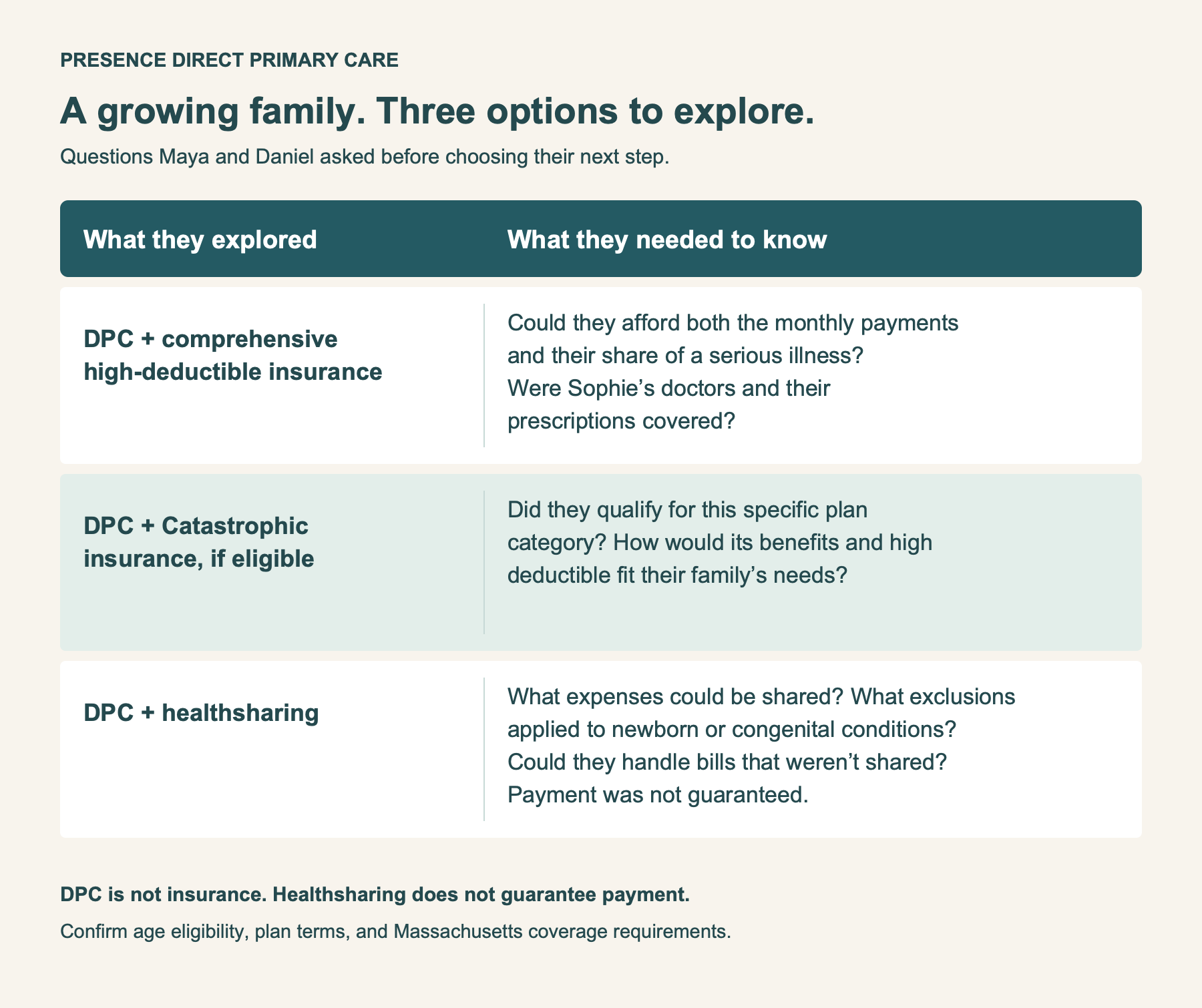
They checked financial assistance and public coverage eligibility, too. They wanted actual family quotes before deciding.
A lower monthly payment was appealing. Knowing what happened if Sophie needed hospital care mattered more.
What they wanted was surprisingly ordinary.
Maya wanted to ask her questions before another month passed.
Daniel wanted someone to assess his back before it interfered with work.
They both wanted a clear plan for Sophie.
DPC couldn’t remove every uncertainty. But it offered a way to make their everyday primary care more understandable—and a physician relationship they could use without a separate charge for every included visit.
They closed the laptop with questions still to answer.
This time, they knew which questions mattered.
Does this sound like a conversation happening at your kitchen table?
Meet Dr. Chiou and explore whether Presence fits your primary care needs.
Medicine at the pace of trust.
Maya, Daniel, and Sophie are fictional characters. DPC is not insurance. Labs, medications, imaging, and outside services cost extra. Healthsharing does not guarantee payment. Confirm practice age eligibility, plan terms, and Massachusetts coverage requirements before making changes.
